

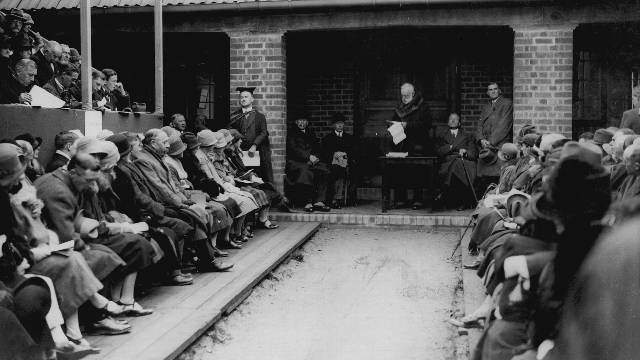
 The National Institute of Poultry Husbandry at 100 - rediscovering an eye witness account
To mark the Centenary of the opening of National Institute of Poultry Husbandry at Harper Adams, we’re sharing a contemporary acc …
Posted 3 November
What is it like to study food at Harper Adams?
16 January 2020

Having looked at some statistics in the agri-food sector last week, we wanted to find out more about the impact of such data on campus. To do so, we spoke to our Food Technology and Innovation Department department about how our degree programmes can open the door to discovering leading research.
The Food Sciences department cover three undergraduate areas: Food and Consumer Studies, Food Technology and Product Development, and Food Technology with Nutrition, all with a slightly different focus. Consumer studies begins at the farm gate, covering a broad range of food sectors. The course is for the student who likes food but isn't sure what they wish to specialise in giving them the chance to work out what they enjoy best from a vast variety of sources.
On the other hand, production development and nutrition hold a more specific route. While production is most widely recognised, nutrition holds an equally useful skill set for people to interpret information for the public health perspective, working to understand food and its benefits.
Annette Creedon, head of Food Science and Agri-Food Supply Chain Management, spoke about the diverse nature of Harper Adams' food degrees and what students can gain from this saying, "Staff and students alike are covering large sectors in their research. There's an angle for everything; food is not just standing in a factory production line, it's much more diverse than that. The work we see students doing proves this."
With projects revolving around drunkorexia (anorexia or bulimia combined with alcohol abuse), chair based exercise, meat quality, and sensor technology, there are a great range of topics being published through the New Year. Using data and public sources including documentaries and publications, researchers can gather ideas about the public's understanding of food and collate data to create, develop, and market healthier food sources from field to fork.
Should you be interested in studying any of our food degrees, Annette gives this advice: "Be open minded, be curious, be willing to try new things. You could find something amazing." You can find out more at our next Open Day on March 21st. You can regsiter to attend here.
Related Posts
The National Institute of Poultry Husbandry at 100 - rediscovering an eye witness account
To mark the Centenary of the opening of National Institute of Poultry Husbandry at Harper Adams, we’re sharing a contemporary acc …
Posted 3 November
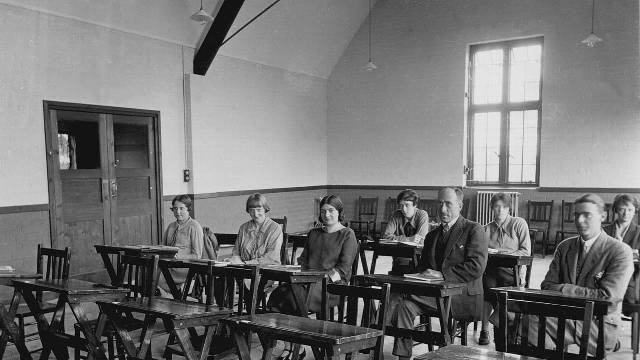 'More than 100 years of expertise' - a brief history of poultry at Harper Adams
Dr Stephen Mansbridge is Reader in Animal Science and Bioinformatics at Harper Adams University as well as Director of the Animal Science Re …
Posted 3 November
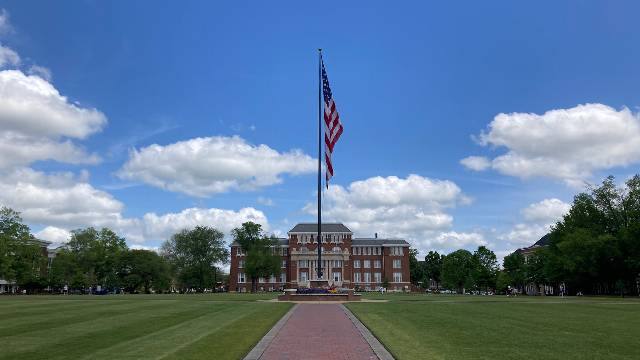 Agricultural Autonomy Institute joins Harper Adams University's 125th anniversary celebrations
A leading American expert in agricultural autonomy has paid tribute to Harper Adams University as it marks its 125th anniversary.Dr Alex Tho …
Posted 22 October
 Sky's the limit: Helen joins MP's fundraising parachute jump
A charity skydive by a Harper Adams University Business Development Consultant has helped raise more than £16,000 for a new cancer cen …
Posted 21 October